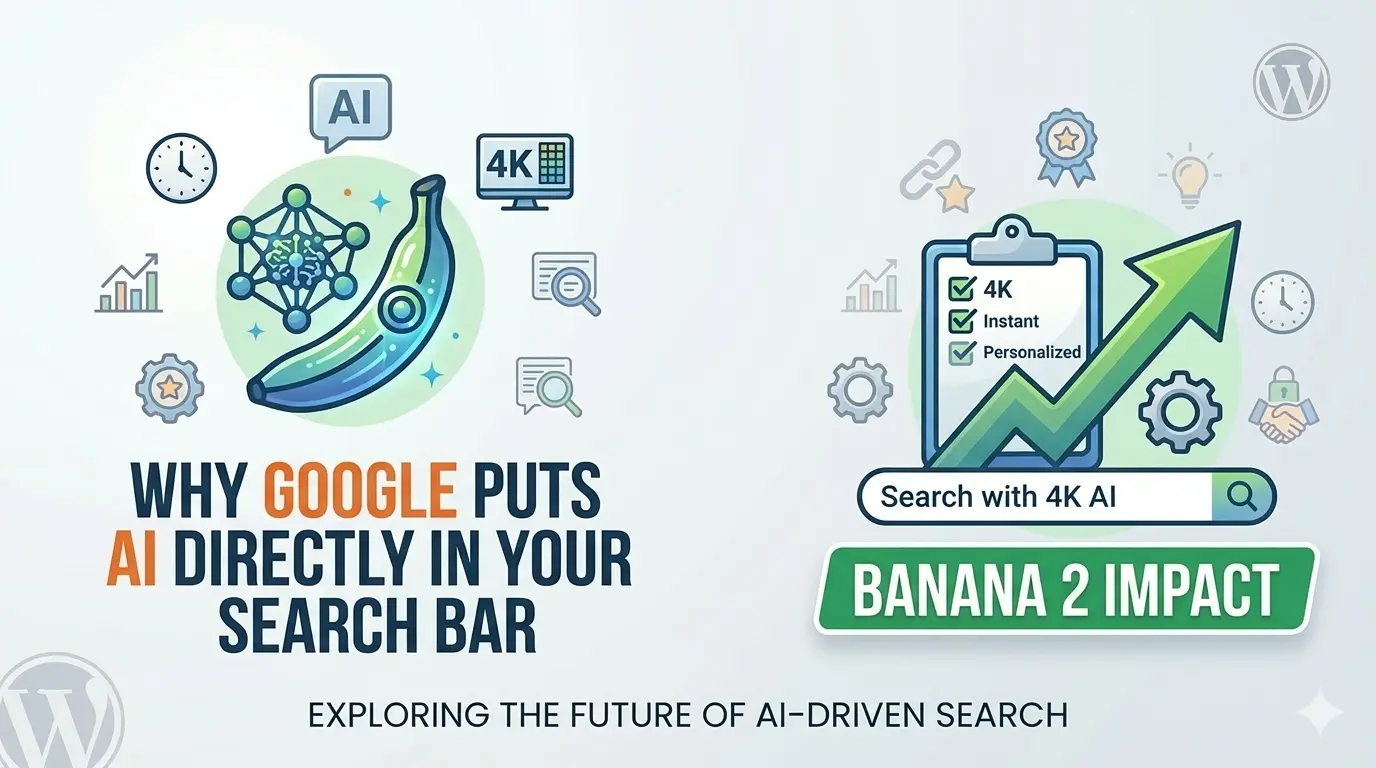
The rapid development of technology creates major changes in the entire digital landscape every few years. The most important new technology development in 2026 will arrive through Nano Banana 2 which introduces a new generation AI system that will transform how online searches function. The concept of putting advanced 4K AI search technology into search bars creates an impression of science fiction, but it has begun to develop into something that people can actually use.
People used search engines for multiple years to search for web links. Users used a search engine to enter their questions, which produced a list of websites that they needed to visit for information. Artificial intelligence is changing the user experience in search engines. Search platforms now provide users with visual explanations and contextual insights and multimedia answers which they can access instantly instead of directing them only to content.
The business world needs to find an answer to this problem which affects both creators and marketers. The integration of high-resolution AI responses into Google search results should be analyzed to determine its impact on content discovery for the future. The research requires us to study three areas which include the historical development of search technology and the rise of visual AI as a key information delivery method and the impact of Nano Banana 2 on search engine-website relationships.
The Evolution of Search From Links to Intelligent Answers
The initial design of search engines used a straightforward model which required users to enter queries while search algorithms fetched results from the internet through keyword matching with webpage links. The system maintained its original structure as developers added semantic search and knowledge graphs and contextual ranking systems to improve user experience.
AI powered search engines established a new operational framework which transformed existing search engine systems. The present-day systems use intent analysis and contextual assessment and user behavior tracking to produce results that match user needs better than traditional keyword-based matching systems.
Google Gemini advanced search systems by enabling them to comprehend challenging inquiries and generate comprehensive responses. The systems utilize their capability to handle large amounts of data to generate results quickly while presenting the information in an organized manner. The upcoming development involves adding visual intelligence capabilities to the search system. The implementation of Nano Banana 2 technology serves this purpose.
Understanding Nano Banana 2 and the Rise of Visual AI
Visual AI generation tools now enable users to produce extremely detailed visual outputs which include images and diagrams and contextual visuals. Users will soon receive automatic content generation which includes images and videos and design examples directly in their search results.
This transformation reflects a growing demand for visual learning. Studies consistently show that users absorb information faster when text is supported by images or visual explanations. The search experience now includes 4K AI generated visuals which platforms use to enhance information delivery and make content accessible to users.
The technology behind this development relies on advanced generative AI technology capable of producing realistic images from text prompts. The systems study large image collections to learn how different elements combine to create visual patterns and lighting effects and complete visual scenes. The developed AI engine enables users to create fresh images which meet their specific requirements instead of accessing existing image databases.
Why Google Is Investing in AI-Generated Visual Search
There are several strategic reasons why search platforms are moving in this direction. The first is user behavior. Modern internet users expect instant answers, and they prefer interactive experiences rather than static lists of links. Integrating AI image generation search capabilities directly into search results allows users to visualize concepts immediately. For example, instead of browsing multiple websites for design inspiration or product ideas, users could simply ask the search engine to generate visual examples.
Another reason is competition. As conversational AI tools become more popular, search engines must evolve to maintain relevance. Integrating AI driven search experience features ensures that traditional search platforms remain innovative and engaging.
Finally, visual AI can enhance accessibility. Complex ideas become easier to understand when accompanied by clear visual representations, supporting better comprehension for diverse audiences.
The Impact on Content Creators and Websites
People who own websites experience traffic decline whenever search technology makes progress. Users will stop visiting websites if search engines start providing them with direct answers and visual content. The situation is more intricate than it appears. Instant answers exist for some queries, yet AI systems require high-quality content to develop their training and validation processes.
Search engines use authoritative sources to ensure their search results remain accurate. Content creators need to adjust their methods to meet the requirements of AI search optimization which operates as a new standard. Creators should concentrate on producing deep and clear content that offers them unique insights instead of using keywords as their main focus. The organization of content into a proper structure enables better semantic search optimization, which allows AI systems to understand how different ideas and concepts are related to each other.
The most important factor that separates different products from one another in this market.
Visual Content as a Ranking Signal
As AI visual generation becomes more integrated into search, visual content itself may play a greater role in visibility. Websites that include original images, diagrams, and infographics may gain advantages in visual content marketing strategy. High-quality visuals enhance engagement and provide contextual clues that help search engines understand page relevance. This strengthens content authority building and improves the chances of appearing in AI-generated summaries.
The trend also supports the growing importance of multimedia SEO strategy, where text, images, and interactive elements work together to deliver comprehensive information. Visual storytelling is no longer optional.
How AI Visual Search Could Change User Behavior
The introduction of high-resolution visual responses inside search results may fundamentally alter how users interact with information. Users prefer to read articles after they preview AI-generated images which provide them with essential information. The behavior of users has increased because search engines now display answers through zero click search results which allow users to obtain information without visiting other websites.
The practice decreases website traffic yet it boosts brand visibility because people use content as a source for their references. Businesses must create content which matches user search intent if they want to maintain their competitive edge through SEO methods. When AI systems identify a website as a reliable source, its information may be incorporated into generated explanations. Visibility therefore shifts from clicks alone to recognition within AI answers.
Technical Infrastructure Behind 4K AI Search
Delivering real-time visual content requires powerful infrastructure. Advanced models rely on distributed computing environments capable of processing massive datasets quickly. These systems utilize AI cloud computing infrastructure to generate images, analyze queries, and deliver results within seconds. Improvements in hardware acceleration and neural network optimization have made such capabilities feasible.
In addition, machine learning image synthesis algorithms enable AI systems to generate detailed visuals while maintaining contextual accuracy. This technology continuously learns from new data, improving visual quality over time. As infrastructure improves, visual AI responses will become faster and more realistic.
The Role of Trust and Content Authority
The growing abilities of AI to create new content make trustworthiness more essential than before. Search platforms Need to verify that their generated images and descriptions deliver accurate information. EEAT SEO principles still maintain their essential function at this point.
Content that demonstrates experience, expertise, authority, and trust helps train AI systems and maintain credibility. Websites that present original research and well-organized explanations build digital content authority which increases their chances of being used as sources by AI systems. Artificial intelligence search systems require authentic sources to operate properly.
Opportunities for Businesses and Marketers
Although the introduction of AI visual search may seem disruptive, it also creates new opportunities. Brands that adapt quickly can gain significant advantages. For example, businesses that invest in AI content strategy 2026 may develop assets specifically designed for visual discovery. Educational graphics, product demonstrations, and visual guides can strengthen brand presence within AI-generated answers.
This approach also supports organic search visibility by aligning content with emerging search patterns. Forward-thinking agencies such as Itxsential recognize that the future of marketing lies in combining technical SEO expertise with innovative content formats. The goal is not simply to rank but to remain visible across evolving AI interfaces.
The Future of Search Is Interactive
The development of Nano Banana 2 and similar technologies demonstrates a larger trend towards creating systems that allow users to search through interactive environments. Users will no longer interact with search engines solely through text queries. Users will now access visual content and conversational answers and contextual information in real-time. The next-generation search algorithms drive this development through their combination of language models and visual generation and behavioral data analysis capabilities.
The search bar itself has developed into an active information generation system which provides users with information instead of fetching it. Users will find it easier to learn because they can study new concepts more efficiently. The digital world requires businesses and creators to make adjustments in their operations.
Conclusion
The launch of Nano Banana 2 marks a crucial advancement in search technology development. Google uses 4K AI search technology which operates through its search interface to create a more immersive visual experience for users. The development demonstrates how user needs have changed and how advanced generative AI systems have developed. The new distribution method will change existing traffic patterns but it creates fresh chances for creators who produce high-quality work with authoritative content and visual storytelling abilities. Search engines still rely on credible sources to maintain accuracy. AI systems require websites that provide structured content and engaging visuals and trustworthy insights to function effectively.
The search bar will develop into an advanced digital assistant which provides users with instant access to visual content and detailed explanations and creative concepts. Organizations that embrace this transformation at the beginning will succeed during the upcoming period of AI-driven research methods.
FAQ
1. What is Nano Banana 2 in AI search technology?
Nano Banana 2 refers to a new generation of AI systems designed to generate high-resolution visual responses directly within search results, improving the way users access and understand information.
2. How will AI visual search affect website traffic?
Some informational queries may become zero-click searches, but high-quality websites will still play a key role as trusted sources that AI systems reference and learn from.
3. Can businesses benefit from AI-generated search visuals?
Yes, businesses can strengthen visibility by creating structured, visually rich content that aligns with AI-driven search experiences and user intent.
4. Will AI replace traditional SEO strategies?
No. SEO will evolve to include visual optimization, authority signals, and semantic context, but the core principles of quality content remain essential.5. What should content creators focus on in the AI search era?
Creators should focus on expertise, clear structure, engaging visuals, and trustworthy insights to ensure their content remains relevant in AI-powered search environments.